
Somerset County Warrant Sources
No official Somerset County online active-warrant list was located in the official sources reviewed. No official Somerset County Sheriff's Office mobile app with an app-only active-warrant search was found either. That changes the search method. A public searcher should not expect one sheriff database to show every active Somerset County warrant, every bench warrant, or every sealed arrest warrant.
The practical route is a fallback chain. Start with Pennsylvania UJS Case Search and look for docket entries that point to a warrant. Then use the issuing court, the Somerset County Sheriff's Office, the Clerk of Courts, or the Magisterial District Judge office to confirm status. If the issue may involve current custody, check VINELink and the county jail channel as a separate step.
This office split matters in Somerset County. A warrant tied to a civil contempt issue, criminal sentence, traffic citation, or preliminary criminal case may route to a different office even when the search starts with the same statewide portal. The public docket helps identify the case source. The issuing court or law-enforcement office confirms whether the warrant is active.
The Somerset County Sheriff's Office page is the official county law-enforcement channel tied to courthouse security, civil process, sheriff sales, and certain warrant-related functions.
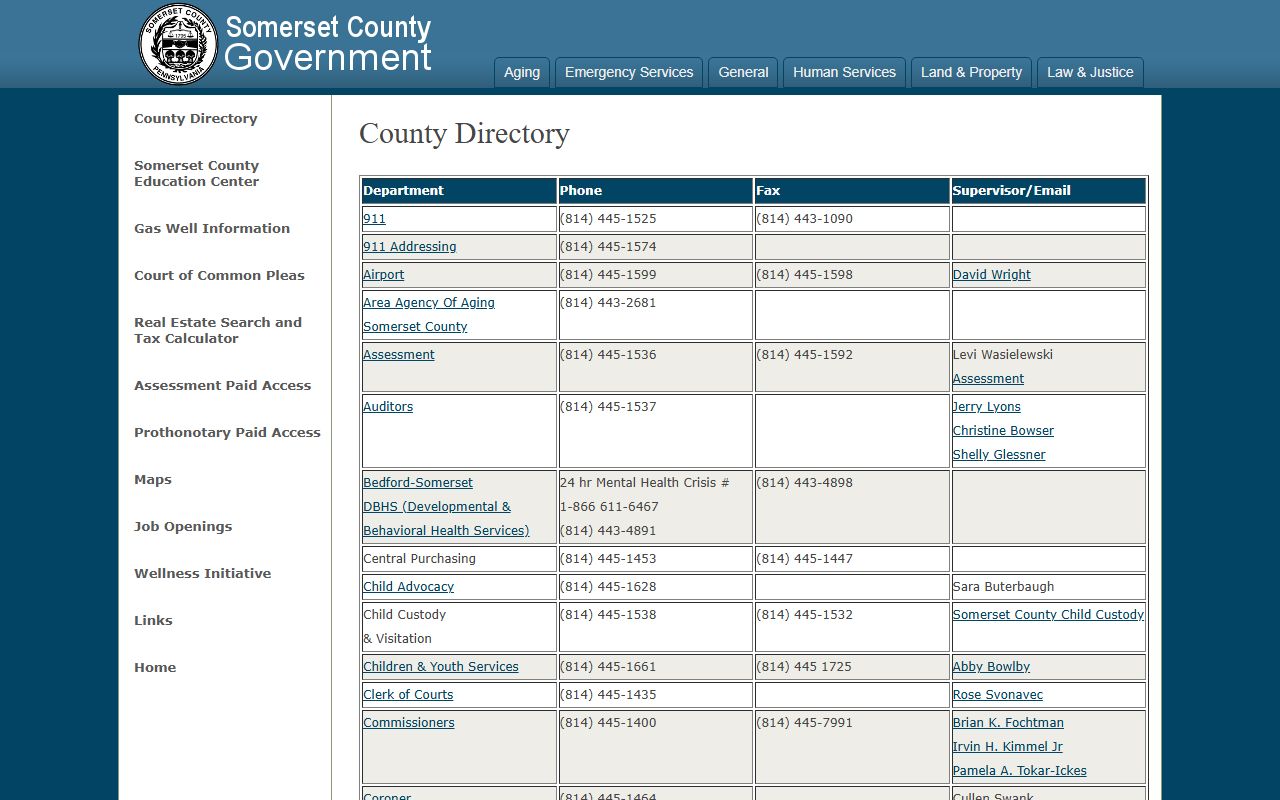
Use that sheriff channel to confirm law-enforcement routing, but use the court docket and issuing court to understand why the warrant exists.
Somerset County Warrant Types
Warrants are not all the same record. In Somerset County, the meaning of a warrant depends on the court level, case type, and status. A bench warrant often comes from a judge after a missed court date, missed payment obligation, probation issue, contempt matter, or failure to follow an order. An arrest warrant may be tied to a criminal complaint or other criminal process. A search warrant authorizes a search, not a public name lookup, and may be sealed before or after execution.
Traffic and summary cases often stay with Magisterial District Courts. More serious criminal cases may begin before an MDJ and later move to the Court of Common Pleas, where the Clerk of Courts maintains the criminal case file. That is why a Somerset County warrant search should check both MDJ and Common Pleas records when the case history is unclear.
- Bench warrant - Usually issued by a judge after failure to appear, failure to pay, contempt, or violation of a court order.
- Arrest warrant - Authorizes law enforcement to arrest a person in connection with a criminal matter.
- Failure-to-appear warrant - Often tied to missed traffic, summary, MDJ, or Common Pleas events.
- Probation or parole warrant - May appear as a detainer, commitment, or supervision-related event.
- Search warrant - Usually not a public active-warrant lookup item and may remain sealed in sensitive cases.
Search Somerset County Warrant Clues
UJS is the main public place to look for court clues. It is not a live active-warrant registry. Search Common Pleas docket sheets for felony and misdemeanor cases in the Court of Common Pleas. Search Magisterial District Judge docket sheets for traffic, summary, preliminary criminal, and non-traffic cases. Docket text may show "warrant issued," "bench warrant," "bail forfeiture," "failure to appear," "detainer," "commitment," "warrant lifted," or similar language.
A Somerset County warrant search works best with a docket number. If no number is known, search by participant name and narrow by Somerset County, court type, case category, and date range. Common Pleas criminal docket numbers may include the Somerset County code in the CP-56-CR format. MDJ records use a different docket style and may be easier to find by citation number, complaint number, incident number, or participant name.
| Search Area | Useful Field | Best Use | Warrant Clue |
|---|---|---|---|
| Common Pleas docket | Docket number | Criminal cases held for court | Bench warrant, bail, sentence, detainer, or warrant-lifted entry |
| Common Pleas docket | Participant name | Name search when the case number is unknown | Open criminal case with missed event or warrant status |
| MDJ docket | Citation number | Traffic and summary cases | Failure to respond, failure to appear, warrant issued, or payment issue |
| MDJ docket | Complaint or incident number | Preliminary criminal matters | Arraignment, bail, warrant, or held-for-court history |
Note: A docket clue is not the same as confirmation that a warrant is still active.
Somerset County Warrant Fields
Because Somerset County did not publish a public active-warrant list in the official sources reviewed, warrant details may appear in pieces across docket entries, court notices, law-enforcement records, and custody systems. Public fields are narrower than law-enforcement fields. A docket may show that a bench warrant was issued or lifted, but it may not show all service notes, risk flags, investigative details, or sealed affidavits.
| Field | What It May Show |
|---|---|
| Defendant name | The person tied to the criminal, traffic, summary, or court-order event. |
| Docket or case number | The Common Pleas, MDJ, citation, complaint, or incident reference used to track the case. |
| Issuing court | The judge, MDJ office, or Court of Common Pleas case source that issued the warrant. |
| Warrant type | Bench, arrest, failure to appear, probation/parole, fugitive, or other court-related warrant type. |
| Related charge | The traffic citation, criminal charge, or court obligation connected to the warrant. |
| Status dates | Issue date, service or return status, and lifted or vacated date if the public record shows them. |
| Bail or commitment | Bail status, commitment order, detainer, or custody-related event where public. |
MDJ and Common Pleas Warrants
Magisterial District Judge records and Court of Common Pleas records answer different warrant questions. MDJ warrant clues often involve traffic tickets, summary offenses, preliminary arraignments, preliminary hearings, bail events, and cases that have not yet moved to the county trial court. If a driver misses a response deadline or hearing, the MDJ docket and PAePay may help identify the citation, costs, and court office, but the issuing court still controls the next step.
Common Pleas warrant clues tend to involve criminal cases that have moved beyond the MDJ stage. The Somerset County Clerk of Courts is the local criminal clerk for Common Pleas files. Criminal docket entries may show pleas, sentencing, probation-related events, financial obligations, warrants, and orders. Use Somerset County criminal court records when the warrant is tied to a full criminal case rather than only a traffic or summary citation.
| Path | Typical Case | Search Tool | Who Confirms |
|---|---|---|---|
| MDJ warrant issue | Traffic, summary, preliminary criminal, non-traffic | UJS MDJ docket and PAePay when payable | Issuing MDJ office |
| Common Pleas warrant issue | Misdemeanor or felony case after bind-over | UJS Common Pleas docket | Clerk of Courts, court administration, attorney, or judge's office as directed |
| Law-enforcement execution | Arrest, service, custody transfer | Sheriff or jail channel, not just UJS | Sheriff's Office, jail, or involved agency |
Somerset County Custody Checks
A custody search can show whether a person has already been taken into custody, but it is not a complete Somerset County warrant search. Use the Somerset County Jail page for local jail contact information. Use VINELink Pennsylvania for custody status and notification when a person appears in a participating custody system. Use the Pennsylvania DOC inmate locator for state-prison inmates and parolees after transfer to state custody.
The VINELink Pennsylvania search is a custody and notification tool, not a court docket or warrant list.

Use VINE after a court or sheriff check when the key question is whether someone is already in custody or whether notification registration is available.
Resolve a Somerset County Warrant
Do not assume a Somerset County warrant is gone because a web search does not show it. Active warrant information can be delayed, sealed, or held outside the public docket. The safest first task is to identify the issuing court and docket number, then contact the court or counsel before appearing or making a payment. A payment may not lift a warrant unless the court accepts that method for the specific case.
- Search UJS by docket number, citation number, complaint number, incident number, or participant name.
- Confirm whether the warrant came from an MDJ case, a Common Pleas criminal case, probation, or another court order.
- Call the issuing court, court administration, counsel, or the proper clerk office to ask what appearance, payment, bail, or surrender step is required.
- For traffic or summary matters, check PAePay only as a payment clue and confirm the court will treat payment as a proper response.
- For Common Pleas criminal matters, contact defense counsel, the Clerk of Courts, or court administration before relying on the docket alone.
- After the issue is handled, check the docket for a lifted, vacated, satisfied, or updated status entry.
Important: An outstanding warrant can lead to arrest, so confirm instructions with the issuing court or legal counsel before appearing.
Restricted Somerset County Warrants
Some warrant records are not public. Search warrants may be sealed during an investigation. Juvenile records are restricted under Pennsylvania law. Expunged, sealed, victim-safety, mental-health, and protected-address information may be withheld or redacted under court rules. The Pennsylvania Right-to-Know Law may apply to some county agency records, but judicial case records follow court public-access rules.
Public records requests may help with administrative sheriff records where legally available. They are not a shortcut to sealed warrant affidavits, confidential law-enforcement intelligence, juvenile files, or active investigative material. For federal warrants, the local county docket may not be the source at all. Federal matters are handled through federal courts and federal law-enforcement agencies.